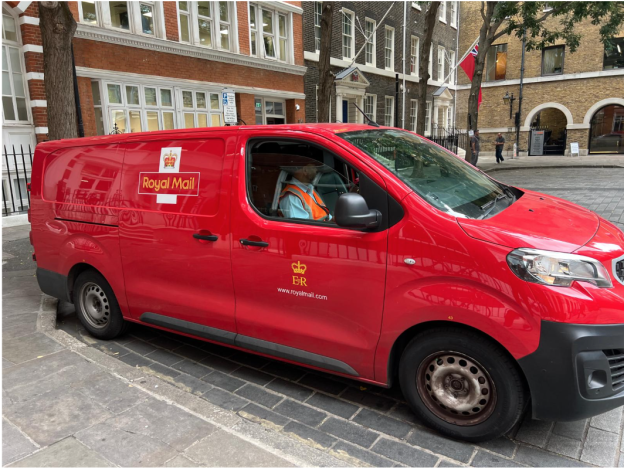
The re-nationalisation of the Royal Mail is the best means of economic growth in every post code in UK, as the new PM desires.
Reclaiming the Delivery Network: Why Renationalising Royal Mail is the Catalyst for Regional Growth
For decades, the standard response to regional economic decline in the United Kingdom has focused on large-scale infrastructure projects: high-speed rail links, regional development funds, and technology hubs. Yet, the essential arterial system of the everyday economy—the infrastructure that connects every farm, high street trader, and home business—remains the humble postal service.
As the performance of a privatised Royal Mail continues to degrade, a growing consensus is forming around a radical reset: bringing the nation’s postal service back into public hands. Far from being a nostalgic throwback, re-nationalisation is increasingly viewed as a vital strategy for regional economic revival. By restoring a fully funded, public-interest Universal Service Obligation (USO), the UK can deliver balanced economic growth across all 124 postcode areas.
The Failure of the Privatisation Experiment
When Royal Mail was sold off between 2013 and 2015, the promise was clear: private capital would drive innovation, lower costs, and modernise the network for the digital age. A decade later, the reality experienced by households and businesses tells a very different story.
Ofcom has repeatedly issued multi-million pound fines against Royal Mail for systematically failing to meet basic delivery targets. In communities across the UK, first-class and second-class delivery timelines have slipped, while entire delivery routes are routinely missed due to severe understaffing.
The core issue stems from structural misaligned incentives:
- Profit over Service: A privatised entity inherently prioritises high-margin urban parcel routes over less lucrative letter routes and rural drops.
- Erosion of the Universal Mandate: Private operators view the requirement to deliver six days a week to every corner of the UK for a uniform price as a financial burden rather than a public duty.
- Workforce Strain: Postal workers face worsening conditions, reduced headcount, and extreme performance metrics, undermining the reliable workforce needed to sustain local communities.
The Andy Burnham Model: Public Control for Public Good
The political momentum for returning public services to public oversight has found its most articulate champion in Greater Manchester Mayor Andy Burnham. By pioneering the re-regulation of regional bus networks under the Bee Network and advocating for local political accountability, Burnham has demonstrated that key public utilities perform best when managed as economic enablers rather than standalone profit centres.
Applying this philosophy to Royal Mail provides a clear template for national policy. Under Burnham’s approach to regional governance, public transport and connectivity are treated as foundational “social infrastructure.” When transport networks are run in the public interest, unviable routes are cross-subsidised by profitable ones to ensure no neighborhood is left behind.
Applying this principle to the postal network transforms Royal Mail from a struggling corporate carrier into an active engine for regional economic policy.
Why Uniform Delivery Means Universal Growth
Economic growth cannot occur if the basic cost of doing business varies wildly by geography. In rural, coastal, and former industrial regions—areas often overlooked by private couriers—the Universal Service Obligation acts as a crucial equaliser.
Renationalising Royal Mail directly supports local economic growth across all postcodes through three key mechanisms:
- Levelling the Playing Field for E-Commerce: Small and medium-sized enterprises (SMEs) outside major cities rely heavily on uniform, affordable delivery rates. Private parcel operators frequently attach steep surcharge fees to “remote” postcodes—a practice that penalises businesses in places like the Scottish Highlands, rural Wales, or Cornwall. Public ownership guarantees that an e-commerce micro-business in an isolated rural postcode pays the exact same rates to reach customers as a corporation based in Central London.
- Re-linking Post Office Infrastructure with Local Banking: A public Royal Mail can be systematically re-integrated with the Post Office network, creating a robust civic banking and logistics hub on every high street. As commercial banks abandon local branches, a unified, publicly owned post-and-banking network ensures cash accessibility and financial services remain available to high street traders in every postcode.
- Restoring Reliability for Local Supply Chains: Modern businesses cannot operate on unreliable schedules. Delays in legal contracts, medical supplies, and localized retail inventory stifle trade. Re-establishing strict public delivery standards restores certainty to daily logistics.
Investing in Shared Prosperity
The privatised postal model has demonstrated its limits: cutting services to protect margins ultimately damages the wider economy. Renationalising Royal Mail acknowledges a simple truth: a reliable, universal postal service is not an expensive luxury, but the baseline infrastructure required for a thriving modern economy.
By shifting the focus from shareholder dividends to economic enablement, a publicly owned Royal Mail can act as the connective tissue for UK commerce. Guaranteeing high-quality, reliable delivery to every postcode ensures that every community—regardless of geography—has the foundation required to build, trade, and grow.




 Chart by Fraser Nelson | Source: ONS Census 2021