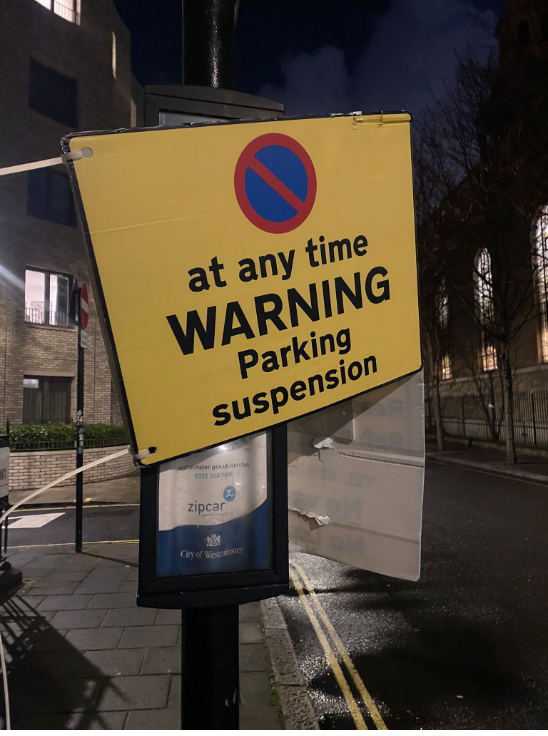
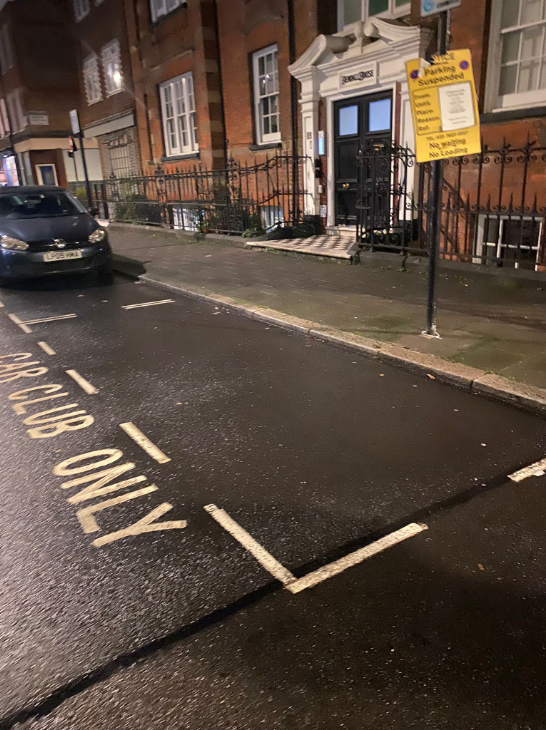
Westminster Council’s parking policies have made the headlines for all the wrong reasons not least because I’ve recently found myself defending the imposition of a parking fine by them! Proposals to introduce parking restrictions during the evenings and weekends have been met which much hostility by local residents and businesses alike with a meeting this evening by the full council facing an 8000 strong petition against the proposals.
So, not only have I been confronted with this issue in my capacity as a London-wide assembly member, I’ve also been clobbered as a local resident. With my assembly hat firmly on, I was interested to hear what the Mayor of London had to say about the issue of evening and weekend charges which is why I submitted a question to him asking “How does the City of Westminster’s new parking policy affect your policies in central London?”. He gave a muted response against the proposals but his response spoke louder about the impact on local businesses (which is of course very good) but not enough about the impact on local residents. With recent price hikes in the cost of transport and the relentless poor service at weekends, those who may not oridinarily have travelled by car are being lured, some would argue forced back into their car. It would not be too cynical of me to suggest that there is a strong element of revenue raising behind the proposals. Residents have wholeheartedly spoken out against the moves and the proposals are also bad for business. For these reasons, the Mayor should be much bolder and vocal in his response. I hope that my recent question to him will prompt him to speak out for the Londoners most affected.
November 2, 2011

Is the Metropolitan Police best placed to investigate Cricket?
Whilst it’s no secret that I am an avid cricket fan, l do not hold any specific loyalties to Pakistan. My biggest concern is for the integrity of the game which I wish to see maintained at any cost.
However, what does strike me about the whole circus surrounding the cheating players is, how it is that the Metropolitan Police find the time to investigate and pursue them through the courts in the first place? This is especially remarkable when we have an organisational body in the form of the International Cricket Council (ICC) which is perfectly able to investigate such allegations and impose the ultimate sanction for any player which is a lifetime ban.
The case for the ICC to investigate and impose sactions is even more compelling given that the original evidence of cheating surfaced as a result of a sting operation by the now defunct News of the World and given what we now know about the paper’s links with the MET. The emergence of such murky liasons should have been sufficient to transfer the case from the over loaded criminal justice system to the ICC, allowing it to get on with putting its own game in order.
The MET should be freed up to manage other more pressing issues of law and order in London. After all, do we really want our top police force investigating issues of “delibrate no balls” in cricket? Nonetheless, It seems that allegations of corruption in the game of cricket take precedence even above those residing in London accused of horrendous war crimes as I failed to convince the Mayor that this is a worthy cause meriting the MET’s time.
So when the shamed players are sentenced on Thursday at Southwark Crown Court, l for one will be left wondering, was this really the best use of our precious police resources and are the police best placed to investigate matters of cricket?
November 2, 2011

Other dropped kerbs in Westminster are marked out by a double yellow line
l’ve found myself having to challenge a parking fine issued against myself by Westminster Council. I’ve appealed to the Parking & Traffic Appeals Service on the grounds of compelling inconsistencies by the City of Westminster’s application of the traffic regulations . The alleged contravention is parking in front of dropped kerb.
Why am l so bothered by it? Apart from the obvious - being caught unaware on a single yellow on a Saturday afternoon in the Church St market neighbourhood. The area happened to be marked out by a single yellow only. In the immediate neighbourhood, there are many other instances where dropped kerbs are marked out with double yellow lines. The attached OS map shows where this took place, marked only by a single line including the other areas in the locality where it is made much clearer that parking is forbidden at all times with double yellow lines. I don’t have any problems with parking restrictions but there must be consistency!
l made my case on the 8th of October and the decision has been adjourned to allow me to present my evidence.
It would be interesting to know if anyone else has experienced a similar thing particularly any other examples of dropped kerbs in Westminster and the rather random application of single and double yellow lines. It would not only build a case about inconsistent traffic regulations in Westminster, it may help other aggrieved drivers too.

drop-down kerb double yellow line inconsistencies at corner of Lisson St & Bell St
October 24, 2011
At yesterday’s meeting of the Environment Committee, Assembly Members heard that while there is an annual cap of 480,000 aircraft allowed to use Heathrow, the number of passengers using the airport could rise from the current number of 66 million to up to 95 million once redevelopment and construction of the terminals are completed. This equates to a third more passengers passing through Heathrow and London. So with passenger numbers rising, capacity at Heathrow airport is getting bigger. This is despite the warnings which the expansionists relay about falling flight numbers and the effect on economic growth.
How’s all this being squared with the maintenance of the annual cap? Well essentially the airlines are bringing in bigger planes. You only have to see the Emirates airbuses at Heathrow to appreciate that while the airlines may only have the same number of slots, they can fly more passengers with the bigger crafts. Naturally the concern is what the local environmental impact of bigger planes for residents of west London’s suburbs will be? We were told by BAA that it is encouraging airlines to use more modern aeroplanes into Heathrow, which are quieter than the older models. Although recent changes to flight paths and operational methods could mean that more people than ever are being affected by aircraft noise, the scale and impact of which is very difficult to evaluate at this point as the Department for Transport begins a mixed mode trial. This did not, however stop BAA spinning the usual line about quieter aircrafts when it came to the issue of noise pollution.
Another major concern is whether we have enough surface transport to cope with the additional air passengers travelling into London by taxi, car lifts and public transport? We were told that of the additional 29 million passengers passing through Heathrow, up to a third would be transfer passengers, namely passengers who are leaving one plane for another without leaving the airport, however this still leaves some 20 million additional passengers coming into London. That sort of number merits another separate meeting on surface transport issues alone when we return to Heathrow issues, particular in West London hotspots like Hammersmith, Paddington & Ealing Broadway where many of the additional passengers will pass through. So while BAA & BA will continue to highlight the cap on flights in and out of Heathrow, this will do little to curb the expansion of actual passenger numbers, of up to one third as airlines introduce bigger planes. Without detracting from the usual objections for wholesale expansion at Heathrow, we should not loose sight of the impact larger planes will have on noise and air pollution particularly for local residents
October 21, 2011
At last Wednesdays Environment Committee, the main item of business was the Royal Parks. This is an area of immense interest and concern to many Londoners given we have eight royal parks covering 5,000 acres providing some of the biggest green spaces in the capital for around 37 million visitors each year.
At the meeting, the chief executive of The Royal Parks, Mark Camley together with representatives from the Mayor’s Office, Jeff Jacobs and Sir Edward Lister were in front of us to discuss the change for the Royal Parks which has transpired more into a quasi devolution to the GLA.
However, what struck me more, having been told about the plans for the half hearted transfer, was the lack of vision and ambition being conveyed. This is given the enthusiasm orginally shown by the Mayor’s office last summer in his “The Mayor of London’s Proposals for Devolution”.
In June last year, the aim was to have responsibility for the Royal Parks devolved from Whitehall to the Mayor of London. This would have meant more democratic accountability to Londoners. Indeed, there was a statement published by the Department for Culture Media and Sports(DCMS)last January, in which its stated objective was to “transfer The Royal Parks to the GLA to ensure clear democratic accountability and have the Mayor as a visible champion for the Parks and to deliver management which is more responsive to the needs and expectations of park users and local people”. This would have meant the Royal Parks no longer being an Executive Agency of the DCMS but instead it would have become an integral but distinct part of the “GLA family” to include bye-laws conferring powers on the GLA to cover trade and business in the parks and the conduct of visitors to their grounds.
What we have ended up with is something very different. The Mayor has instead been given powers over a new Royal Parks Board, to which he has powers to appoint half of the 12 member board including the Chair. Of the remaining six, three are to be appointed by London’s local councils, one must be a member of the Royal Household with the final two seats held by the agency’s Chief Executive and a second executive. So the parks will remain in Crown ownership with City Hall merely gaining “a voice in the parks’ management”. Crucially, the Mayor does not control the budget for the Royal Parks. So as Sir Edward commented, we have ended up with a “half-way house”, which we will almost certainly have to return back to in a few years to reform further. Jeff Jacobs also conceded that the original ambition for the Parks had been compromised during the lengthy legalisative process of the Localism Bill.
As for vision, we got very little of this, as we were told that in essence, very little would change. However, even with the quasi devolution which we ended up with, I would still have preferred to see more ambition and vision expressed by the Mayor’s office. For example, ideas for allotments perhaps?, playing fields? or possibly a discussion on changes in the horticulture so as to inspire Londoners to use their Royals Parks a lot more. Instead, the meassage was no change on the horizon. This is disappointing, because whilst hoping for a “Londoner’s Park”, we ended up with a “half-baked Mayor’s Park” which obviously has yet to inspire the Mayor and his office to provide Londoners with a new vision for one of our most valued assets.
October 17, 2011
Next page
Previous page