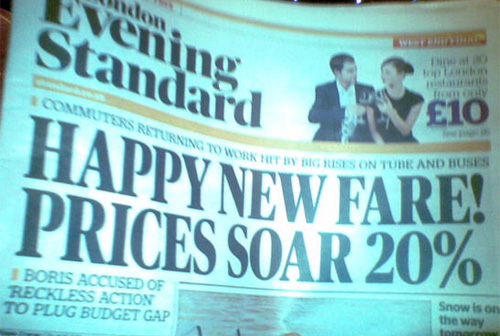
 Boris Johnson started the year by hitting Londoners with record public transport fare increases of up to 20 per cent on a single bus journey and 18 per cent on some outer London tube fares. These are the biggest real-terms fare increases in the history of Transport of London.
The direct result of the London Mayor’s decision will be a big, late-recession hit on the finances of public transport users (especially those on lower incomes who spend a higher proportion of their incomes on travel).
People are rightly pointing out the injustice of public sector workers being urged to forego pay increases while Boris wades in with a massive 20 per cent hike in their bus fares. And what do commuters get for their increased fares? The Mayor who promised “more bang for your buck” is actually proposing a reduction in bus services by eight million kilometres. This is on top of his decision to start reducing the number of London’s police officers (455 fewer by 2012/13) and firefighters (16 less during 2010-11).
This is all in contrast to his natural, instinctive defence of those “masters of the universe”, the investment bankers on whom we have become dangerously dependent. Appearing oblivious to the public revulsion at the bonuses, excess and peril in which they placed our economy, Boris went in to bat for the City (leading figures from which helped fund his election campaign).
Obama has come out so strongly in favour of re-regulating financial services that the Tories nationally have realigned themselves with the United States government. But Boris is still “instinctively anxious” (David Cameron had to deny a split over the issue) and continues to warn somewhat hysterically that bankers could leave London in their thousands. This claim looks more dubious by the day as big firms cut their year-end payments as a result of Alistair Darling’s reforms and the property market looks up.
How Britain and the world emerges from the economic crisis and what regulatory shape our financial services take is set to be a key battleground in the coming months. Will Boris Johnson continue to rail against any Government action and increased regulation? The same City figures who financed his bid for the mayoralty also fund the Tory Party and may expect similar levels of support.
It’s clear that, in the capital, the Tory Mayor had no more hesitation in clobbering the travelling public with massive fare rises than he had in jumping to defend the financial services from any kind of Government action.
Is this what we can expect from the Tories nationally? In opposition, they have taken a populist line in support of Obama’s proposals. But let’s watch this space.
First published in Tribune, 31 January 2010