Archives – June, 2008

As another thrilling football tournament comes to an end with the pre-tournament favourite Spain winning Euro 2008 last night, many of us will have withdrawal symptoms in the pubs and front rooms of the country.
Even without a British team involved in the tournament hosted successfully by Austria and Switzerland, it was not to hard to be absorbed into the nightly entertainment and drama as many were in the UK, very often adopting other national sides as their team. This bodes well for how it is possible for people’s loyalties to change from solely nationalist ones and be driven by which is the more entertaining side as teams like Holland, Russia and Spain were happily adopted by the British public.
Also credit has to be given to those hosting such events, as to all intents and purposes all those travelling fans who went to Euro 2008 enjoyed themselves. I witnessed this for myself most recently when I went to the Champions league final in Moscow in the spring – it was clear that a great deal of good organisation had gone into a successful and safe event and the host nations must be congratulated.
In an increasingly secularised Britain, I wonder if football is not beginning to take on almost the resonances of a new kind of organised quasi-religion? The Church of England’s regular attendance figures are continuing to steadily decline while a whopping 8.9 million viewers tuned in to the match on Sunday evening. As a football fan myself I regularly experience, alongside thousands of others, a kind of Saturday afternoon pilgrimage to the hallowed turf of my favoured team and stood united in worship of our chosen idols.
It would be interesting to compare and contrast numbers of those regularly attending matches and watching them on television and those regularly attending worship – across all organised religions. Is football taking over a role in our culture previously occupied by those religions and if so why? It is certainly an interesting debate which could throw up some interesting conclusions about modern society!
June 30, 2008

This month l went to the European Parliament to take part in a session on ‘SOS Bangladesh’, covering the human rights issues of the present political impasse and the impact of climate change is having on the region.
I was there to make my contribution on the latter, given that – if present trends continue – the country will disappear under the waves by the end of the century. I found myself inspired by our hosts, Belgian MEPs Johan van Hecke and Bart Staes, who are keen to argue for proper rights and support for climate change ‘refugees’.
On my last trip to South Asia in August 2007, l left the British Isles coping with our floods. By the time l arrived in Delhi, we were hearing about floods making their way along the Ganges through Uttar Pradesh and Bihar from the Tibetan glaciers. When l got to Dhaka we were hearing that the floods were also coming down along the Brahmaputra through Nepal and Assam from the same source. And as l left India via Calcutta, both hit the Bay of Bengal causing one of the most severe floods the country has experienced in recent times.
There is no doubt that both the frequency and intensity of these events have increased in this part of the world; China is another country suffering increased flood risk from the melting Tibetan glaciers.
Unfortunately this is only one part of the story. The Bengal delta is in for a double whammy due to rising sea levels. In recent times several small islands in the Bay of Bengal have disappeared, including two on the Indian side. With global warming of 3-4 o C, further rising sea levels will result in tens of millions more people being displaced by floods every year.
Last year two reports on the science and economics of climate change were published. The first, from the Intergovernmental Panel on Climate Change (IPCC), clearly established the link between human actions and global warming. More than 2,500 scientists found that there was a 90 per cent chance that humans were the main cause of climate change and called for drastic action.
The second was the Stern Report, which argued that the benefits of strong early action clearly outweighed the costs, as ignoring climate change will eventually damage economic growth.
If we fail to act now and over the next few decades, we risk major disruption to economic and social activity later in the current century and beyond. The resulting catastrophe could be on a similar scale to those during the great wars and economic depressions of the first half of the 20th century.
What is clearly happening on the ground in Bangladesh and the surrounding area is that people are voting with their feet. We are beginning to see massive rural migration to the mega Asian cities like Dhaka and Calcutta. This is not surprising and is something humankind has been doing since the beginning of its existence – moving around the earth to find a secure home.
The difference now, though, is that the climate change inducing such movements has been linked to human lifestyles and activity in other parts of the globe – thousands of miles from those affected.
It is in this context that we are hearing louder calls for the acknowledgment of “climate change refugees” who may end up with similar needs to those who fled their homes in the early part of the 20th century in response to war or economic disaster.
At that time the Geneva Convention was put in place to guide the world’s response. We now need something similar to be developed that will guide the response to those who are forced to flee their homes due to flooding and the climate change related environmental disasters of the 21st century.
I welcome this move believe the European Union is the right place for this idea to develop, as the previous century’s movements all evolved in mainland Europe and can thus draw from this experience and perhaps provide useful precedents. It should be noted however that, unlike the population movements of the last century, most of this climate change induced migration will be localised within regions rather then between continents.
The Bay of Bengal scenario is a good example of this – where most of the movement is from rural areas to the large cities. Those cities and others facing a similar situation in the future may well need support from the global community to adjust to their rising populations and to cope with providing for the needs of people who have had to abandon their homes and way of life.
What is clear now more then ever, to quote a columnist from the Independent newspaper: “It is happening because of us. Every flight, every hamburger, every coal power plant, ends here, with this.” We owe it to these modern day refugees to ensure that we do our best protect their threatened homelands and take responsibility for the damage being done by our way of life.
June 13, 2008

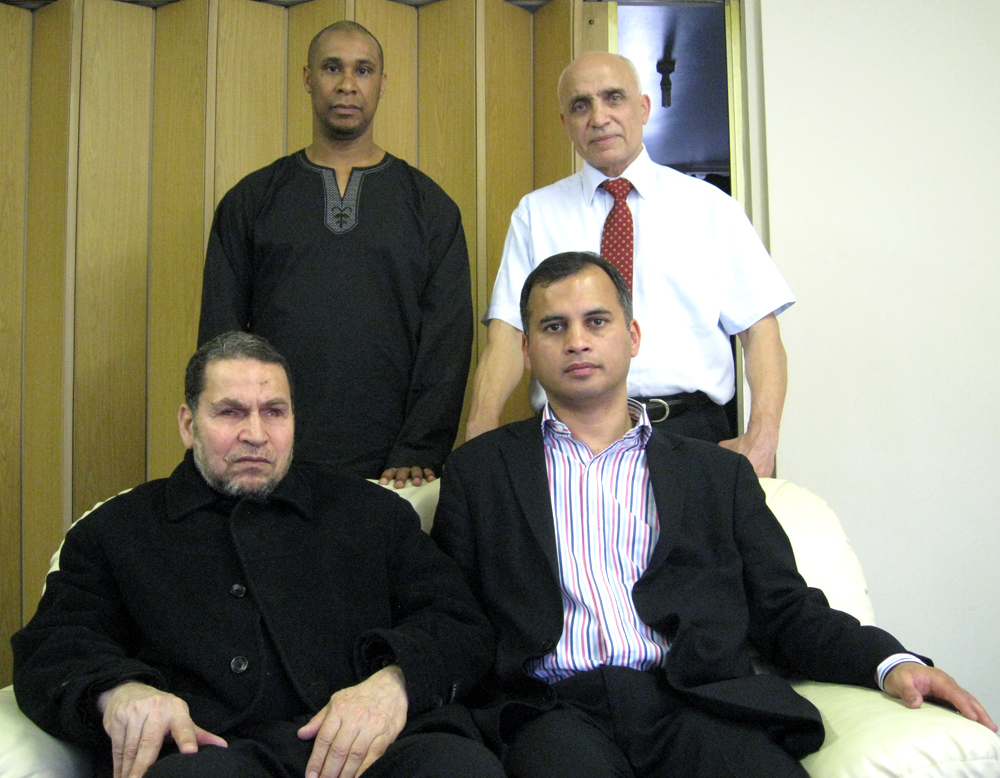
Last week I was at Southwark Crown Court to observe the harrowing trial of Brian Donegan who last August launched a vicious unprovoked attack on the Imam of Regents Park mosque, Shiekh Mohammed El-Salamouni. Sheikh El-Salamouni was left lying on the floor of the mosque with horrific injuries and is now blind for life. In its symbolism to those in the Muslim community, the attack would be comparable for Roman Catholics to an attack on an archbishop at Westminster Cathedral. To add to the local community’s distress, the fall-out from the attack is that Imams from Al-Azhar University who have provided us with the Imams at Regents Park for many years could now leave London if the Egyptian authorities do not feel they will be adequately protected in London .
It is of scant consolation to Sheikh El-Salamouni, but Brian Donegan will be imprisoned indefinitely in a secure hospital after he was declared insane by the court. His punishment and the fact he will spend the rest of life behind bars needs needs to be properly explained to the local community and users of the mosque, some of whom are concerned that the lack of a traditional “guilty” verdict means Mr Donegan has somehow got off lightly. This of course is not the case. It would take the intervention of the Home Secretary for Mr Donegan’s sentence ever to be revisited – something I do not envisage happening and something I will do everything in my gift to prevent.
I have written to Jacqui Smith the present Home Secretary to press home this fact and to emphasise to her that the likes of Mr Donegan must not be allowed to harm our excellent record of harmonious community relations here in London.
Clearly , in the meantime, security needs to be improved in Regents Park mosque and reviewed at other mosques and religious buildings . In light of this horrific experience , it is important that we at least have security outside the room when an Imam is giving counsel – along the lines of that given to MP’s during their surgeries. Mosques should be encouraged to liaise with local police and Safer Neighbourhood Teams for advice on ensuring that religious buildings are as secure as possible for both staff and worshippers.
I sincerely hope this is not the prelude of us losing the Imams from Al-Azhar University in Cairo at Regents Park mosque. Over the years they have provided an invaluable service to the local Muslim community, stretching right back to the appointment of the much-respected Zaki Badawi as Chief Imam in 1978 .
l have written to the Foreign Secretary to outlining my concerns and to ask him to reassure the Egyptian authorities that their Imams can in future continue to feel safe in London.
June 11, 2008

On a recent weekend trip with friends in Paris, l spent a whole day using the famed velib ( short for free or freedom bikes in French ) bike scheme in the city and it was certainly a joy to use as a tourist. Not surprisingly while on my bike l imagined how a similiar scheme would work in London.
Last summer the Paris authority launched the Velib bike scheme, depositing 20,000 heavy duty bicycles in 750 or so special racks around the city and anyone who wants one simply swipes they travel card and pedals off wherever they want to go. Subscribers must pay 29 euros ( £ 20 ) a year, give their credit card details and leave a 150 euro credit deposit. This buys half an hour’s pedalling a day and a card to lock and unlock bicycles from automated stations spaced every 300 metres in the city centre. Visitors to Paris can buy a daily velib card for 5 euros. The bikes have already been borrowed 1.2 million times, that is on average 6 journeys a day largely short ones.
Nowhere is the project being watched with greater interest then in London itself with the previous mayor having asked Transport for London to develop similiar plan for London and bring together several schemes across the whole of the city. In many ways an investment in such a scheme would be a much better initiative to encourage cycling then bringing the Tour de France back London again, as l’m not convinced that bringing an elite sport actually gets people on their bikes.
It was also immediately apparent some of the problems the bike hire scheme was having in Paris. For example to was clear that some stations were more popular for bike hire then others like those at low-level stands rather those at higher levels. Thus one would have to have a major exercise each night to move the bikes around. When you did find a bike it was often punctured and not roadworthy, so maintenance is a key issue as well. At present in Paris, the advertising company JC Decaux provides all this for free-advertising in Central Paris but it will be interesting to see how long this continues. Moreover it is suspected that useage will be seasonal, that is the real test will come with the end of summer and return of the winter months.
A number of ” free-bike” schemes have been road tested in London like the OY bikes in Hammersmith & Fulham three years ago. Here the bike could be hired for 30 minutes with a £ 10 registration fees using the OYbike call centre. It’s biggest issue was its geographical coverage as it was restricted to the London Borough of Hammersmith & Fulham and for any scheme to be successful it would need to cover the whole of Central London. Surprisingly in University towns like St Andrews and Cambridge when it was tested all the bikes had been stolen in the early pilot schemes. And in cities like Southampton and Bristol lack of cooperation from rail operators was felt not to have helped the bike hire schemes.
That said it would be great to see a comprehensive bike hire scheme in London learning from similiar exercises across the world and not just Paris. On my return to London after the weekend trip to Paris, l was reminded that the original bike hire scheme in Europe was in Barcelona with their Bicing cycle scheme achieving over 90,000 subscribers, 2 million hires, 960 reduction in CO2 emissions and the scheme being extended to cover all the city districts in 2008. It sounds to me that I should take my next private research trip there!
June 11, 2008

Recently at my family home over a meal, l found myself talking economics with my mum for the first time in living memory when she told me “Did you know that a sack of rice has doubled in price in London?’ I was reminded of reports earlier this year that various UK and US supermarkets have been ‘rationing’ rice sales in recent months amid fears about panic buying and supply problems. Much of this rationing has taken place in areas with high proportions of Asian residents where rice is the staple of their diet, for example in parts of Leicester.
Given that this could be said to a very good indicator of the increasing ‘purchase power’ of the Asian middle classes globally, perhaps the new Mayor should tread carefully before taking forward any plans to close London’s embassies in countries such as India and China.
Increasing prosperity amongst the Asian community globally should not be underestimated on it’s capacity to impact upon the London and British economies as a whole like the recent world food shortages and fuel price increases. We need to recognise the potential amongst all the diverse communities in London and encourage them all to contribute to our city for the benefit of all of us. We need to promote London to Asian people as well as those from all our communities, both those who already live here and those who are still abroad to persuade them that London and Britain is a great place to use and travel to for holidays, tourism or even education. I believe that having embassies to maintain links and promote London in other parts of the world is a key part in this.
Boris Johnson is intending to consult on proposals to close a number of London Embassies in overseas cities. In my view this is shortsighted. Again, shaving a few pence off Londoners council tax bills will initially be a popular move, but the impact on London’s ability to attract new economic benefits in the future may not be so smart if it begins to affect all of us.
June 9, 2008